



[Lecture] Mass Killing, Genocide, and the Ethics of War: Historical, Legal, and Contemporary Perspectives (ShoahLab)
The Institute for Philosophy and Social Theory, University of Belgrade organizes a series of online open lectures on various topics linked to the history and teaching of the Holocaust, genocides committed in the contemporary history, anti-Semitism, anti-Gypsyism and other forms of racism and intolerance, with the aim of circulating and acquiring new knowledge and creating new networks and forms of collaboration for the study of the Holocaust between institutions, organizations and individuals in Europe, the US and other countries. The lectures are aimed primarily at students of any age and curriculum, at experts, museologists, historians, educators, but also at the general public.
Abstract:
In view of the catastrophic loss of life and humanitarian disaster in Gaza, triggered by the October 2023 Hamas attack on Israel, scholars and observers are debating whether these events constitute genocide, ethnic cleansing, crimes against humanity, war crimes, or acts of justified war — and whether proportionality has been observed. Regardless of terminology, the scale of destruction and human suffering is shocking.
This paper begins with an examination of mass killings in antiquity and mythology, including the narratives of Noah, Joshua at the entrance to Canaan, the Book of Esther, and the historical destruction of Carthage, Thebes, Troy, and the Aztec civilizations. It then surveys religious, racial, and national justifications historically invoked to legitimize mass violence.
The analysis proceeds to modern cases of mass killing from the late 19th century through the 21st century — including colonial atrocities, genocides, and ethnic purges — highlighting both legal definitions and political debates surrounding these acts.
Finally, the paper explores theoretical frameworks from multiple disciplines for defining genocide, crimes against humanity, and war crimes, integrating perspectives from political philosophy, history, and ethical theory, with a focus on their application to the contemporary Gaza conflict. This includes a critical survey of scholarly debates on whether current events in Gaza fit the criteria for genocide, ethnic cleansing, or crimes against humanity, and the ethical dilemmas surrounding just war and proportionality.
Bio:
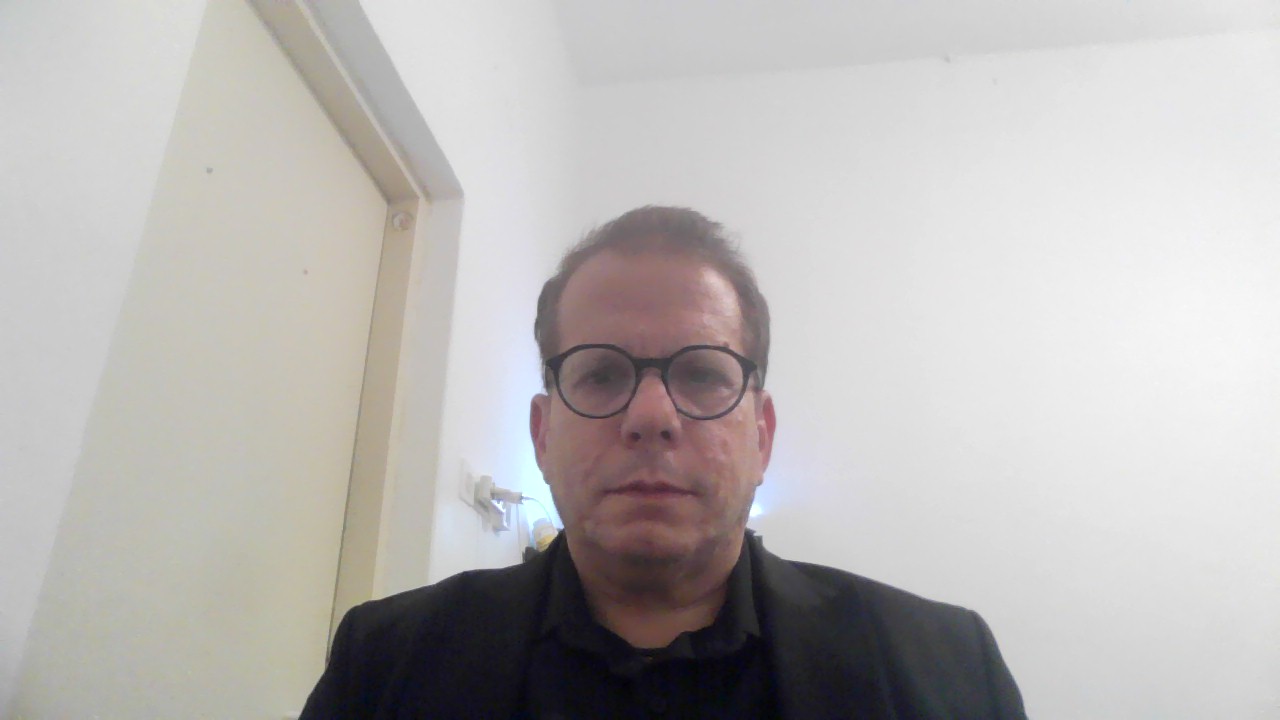
Alon Segev is a scholar of modern intellectual history whose work explores the Enlightenment and Counter-Enlightenment, religion and violence, the Holocaust, genocide, and broader political and cultural developments in the 20th and 21st centuries. He has taught Religious Studies and Ancient Philosophy at the University of Connecticut and Ethics at Loyola University Chicago, and has held academic appointments at Heidelberg, Marburg, Ruhr University Bochum, Halle, and the University of Innsbruck. He subsequently served as a research associate at the Institute for Orthodox Christian Studies in Cambridge.
His current work examines political and cultural developments in Germany and Austria between the First and Second World Wars, as well as the humanitarian disaster in Gaza within a broad political and historical framework. His major publications include Thinking and Killing (De Gruyter, 2013), Political Readings of Descartes in Continental Thought (Bloomsbury, 2019), and Gerhard Kittel’s Defence (with Matthias Morgenstern, Berlin University Press, 2019).