



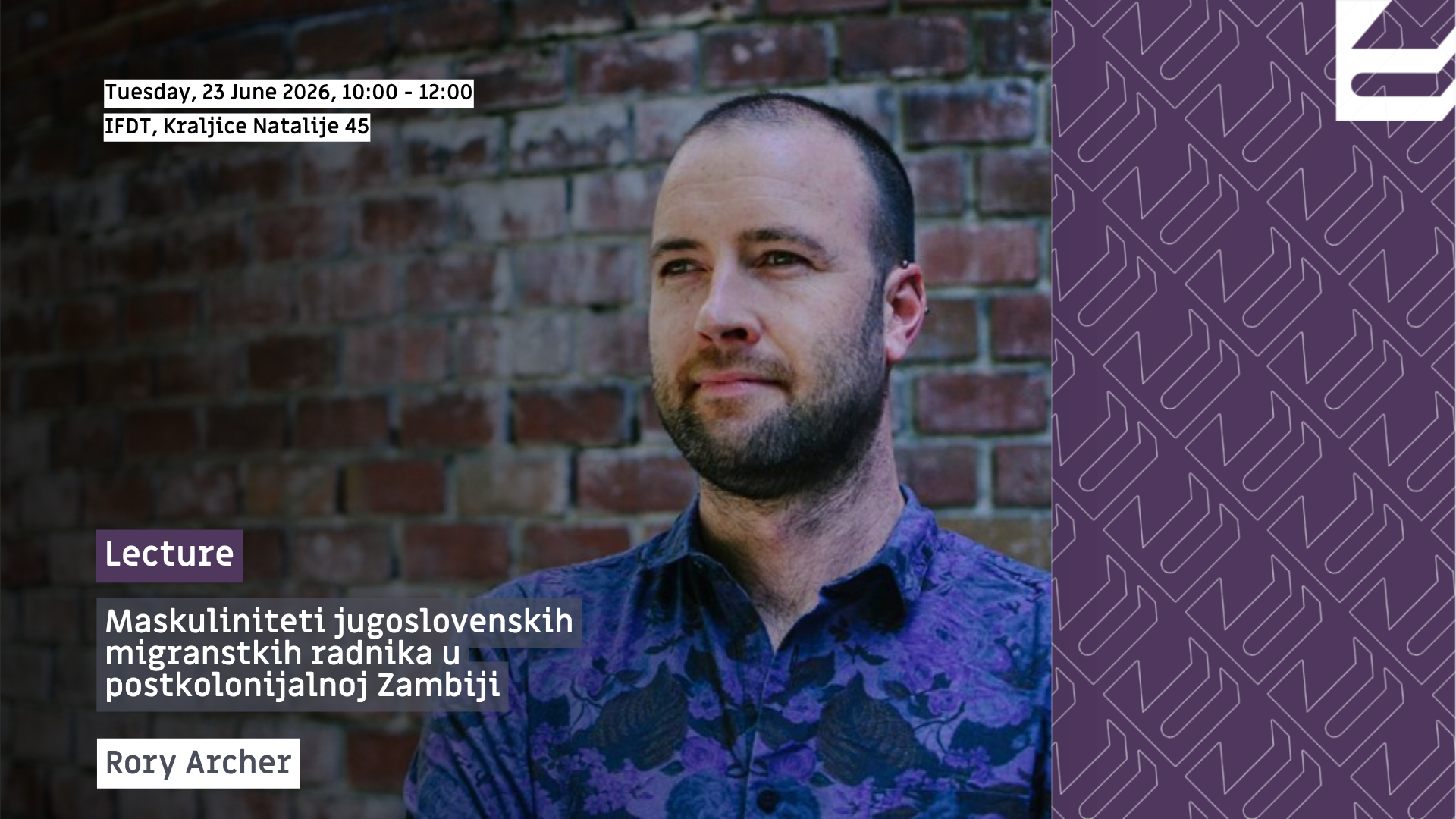
[Lecture] Rory Archer: Yugoslav Labour Migrant Masculinities in Postcolonial Zambia (GenLab)
Based on archival research and oral history interviews conducted in Zambia and post-Yugoslav space, Rory Archer examines the experiences of Yugoslav labour migrants in postcolonial Zambia in terms of masculinities, exploring how their presence reflected broader currents of nonaligned solidarity in the decades following British colonial rule. Drawing upon contemporary social anthropological research from post-Yugoslav space, Archer argues that two modes of masculinities were in simultaneous operation and can help to make sense of the tensions inherent in the role of Yugoslav male workers in Zambia. An adventuring young Yugoslav man (“frajer”) might have driven fast, drunk heavily, and boasted about sexual conquests, but according to the motif of the “father,” the same person would also understand himself as a provider, whose responsible, serious, and protective characteristics would be used in assisting Zambians to develop as industrial workers.
Dr Rory Archer (University of Graz) a social historian whose research primarily focuses on gender, labour, migration and racialised ethnicity in Yugoslav space. From 2022-2025, he worked on the research project “A Socialist Workplace in Postcolonial Africa: A Connected History of the Yugoslav Workforce in Zambia” at the University of Vienna, led by Goran Musić.