



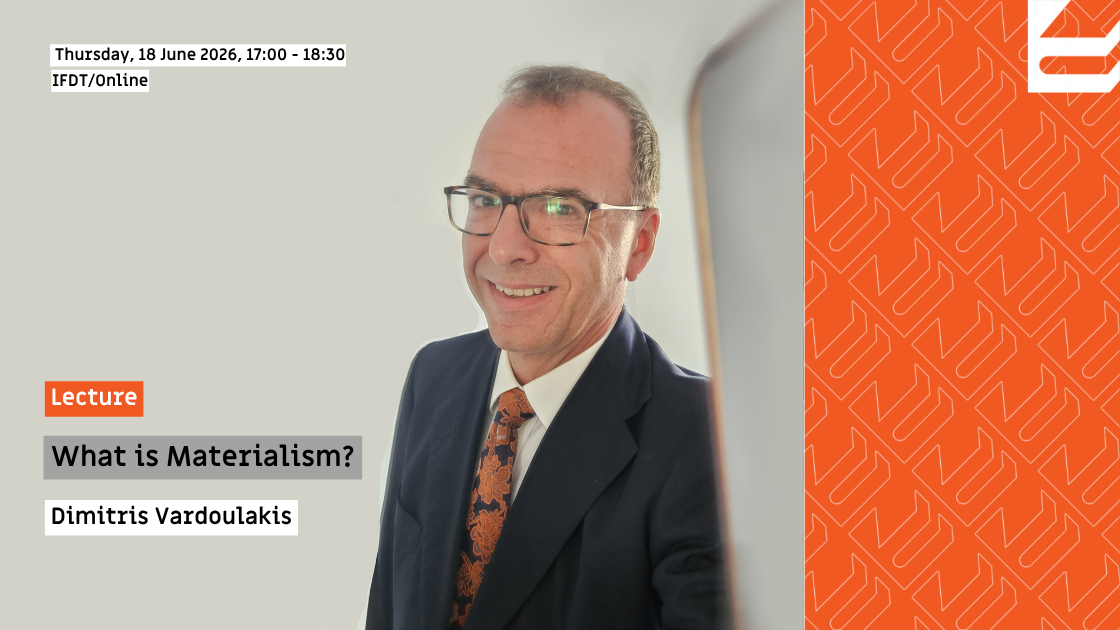
[Lecture] What is Materialism? – Dimitris Vardoulakis (CriticLab)
What is Materialism?
How has philosophy conceived of the abject, the oppressed, the colonized or the peripheral in its own history? From Heidegger to Althusser, the move is invariably the same: whether it is the recovery of being from its reduction to “mere presence” or the rediscovery of an “underground current” of materialism that resists transcendence, what is oppressed is determined in opposition to metaphysics. The difficulty with this approach is the inevitable dialectical reversal: whenever something is defined in opposition to something else, then the two are intertwined in a “master and slave” dialectic that unsettles the clear boundaries between oppressed and oppressor. We cannot simply negate metaphysics without presupposing it and thus allowing it to live on.
Is it possible to construct a protocol for the reading of the history of philosophy that avoids this dialectical reversal? I will argue that it is, so long as we understand how materialism is not merely, or even primarily, opposed to metaphysics, but rather a way of conceiving a performative or queer ethics.
Dimitris Vardoulakis was the inaugural chair of Philosophy at Western Sydney University. Some of his books include Freedom from the Free Will: On Kafka’s Laughter (2016); Spinoza, the Epicurean: Authority and Utility in Materialism (2020); The Ruse of Techne: Heidegger’s Magical Materialism (2024); and The Agonistic Condition: Materialism and Democracy (2025). He is the co-editor of the book series “Incitements” (Edinburgh University Press) and the journal Philosophy, Politics and Critique. He is currently Vice President of the Council of the Humanities, Arts and Social Sciences (CHASS) and has served as chair of the Australasian Society for Continental Philosophy (ASCP).