



EduLab brings together a group of researchers with an interdisciplinary orientation who critically engage with various forms of education and its history, as well as their philosophical underpinnings. Our research interests are of both theoretical and practical nature, as we explore the origins and development of theoretical concepts of education and the ways they are implemented in contemporary educational policies and strategies.

EVENTS
No event found!
NEWS
PUBLICATIONS
The establishment of EduLab was motivated by the necessity for a well-versed, thoughtful, and systematic response to the challenges posed by various educational conceptions and policies in contemporary society. By well-versed, we mean the response that presupposes an understanding of the development of educational ideas themselves, their various applications throughout history, as well as the relationships between ideas and practices with contemporary educational policies. By thoughtfulness, we insist on a fundamental and continuous critical analysis and (self-)reflection regarding ideas, practices, and policies of education. Finally, systematicity allows for considering various levels of education and all societal levels through which contemporary concepts and practices are refracted and come into contact with new generations.
Members of Edulab are experts in the fields of philosophy, sociology, psychology, pedagogy, political science, anthropology, andragogy, and literary theory, with a constant openness to including new members. Our vision is to contribute to the betterment of education through research, collaboration and public engagement.
EduLab has three main goals:
- Offering a fresh theoretical perspective on education through interdisciplinary scientific research.
- Making education more present in the public through organizing lectures, discussions, debates, round tables, and other public events, including as many relevant agents in education as possible (academia, teachers, decision-makers, students, parents, etc.).
- Finding ways for the results of the theoretical work and public engagement to be applied in practice, by discovering innovative solutions for current problems of the educational system and creating alternative educational contents that could revive interest for the humanities and social sciences, both in school and beyond.
We also strive to connect with colleagues and institutions with similar aims in the country, region and beyond, because we believe that the creation of an active network of interested collaborators: members of academic community and teachers, is necessary for a true improvement of educational theory and practice.
In line with the stated goals, the main activities of Edulab include:
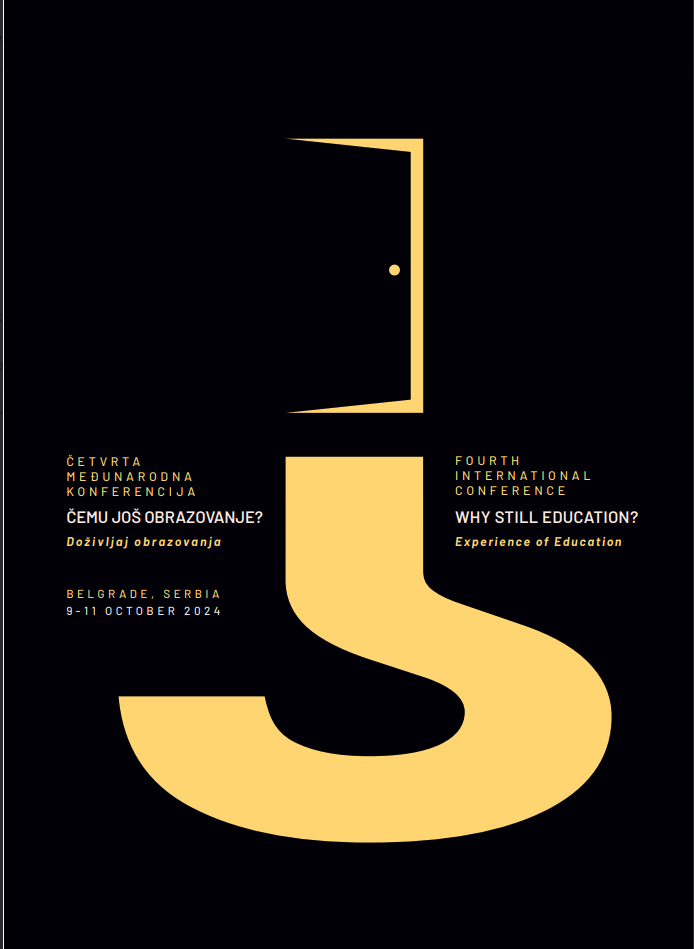
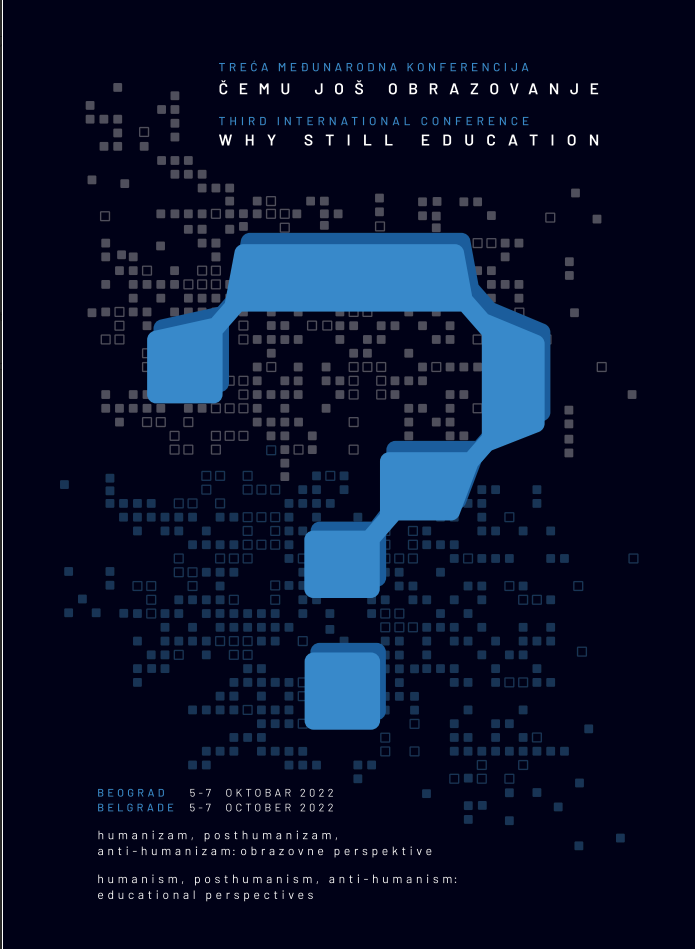
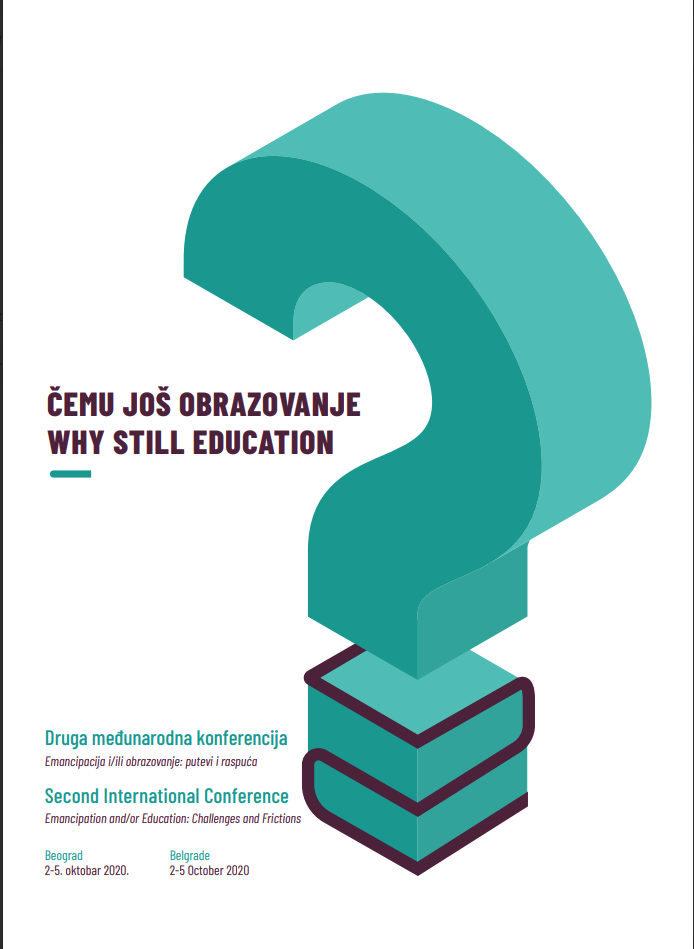
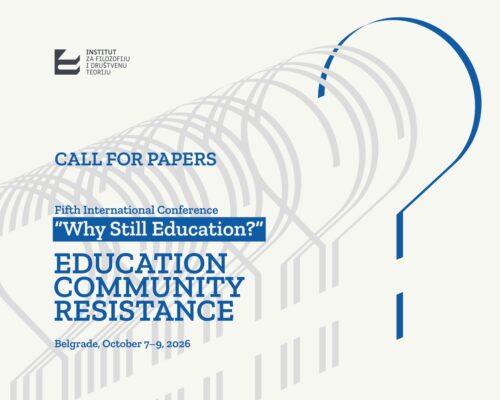
- Organizing the international biannual conference Why Still Education?, whose main focus is determined each year by a different subtitle. This event is meant to intensify the theoretical exchange between experts from Europe and beyond, and in this way also practically contribute to improvement and innovation with respect to educational strategies;
- Organizing reading groups, lectures, seminars, round tables, scientific meetings, and other events on educational topics, meant for academic community and the wider public;
- The production of expert contributions and initiating scientific debates on education in the country, region, and beyond;
- Cooperation with kindergarten teachers, schoolteachers, and university professors, and organizing seminars for educational workers;
- Promoting greater influence of experts on the public and decision-makers regarding educational policies;
- Producing new educational contents and tools, primarily in the field of humanities and social sciences, with a special focus on new media.
Coordinator:
Secretary:
Members:
External associates:
Aleksandar Milanković (Doctoral candidate, Facilty of Philosophy, University of Belgrade)
Aleksandar Ostojić (Faculty of Economics in Subotica, University of Novi Sad)
Aleksandra Peričin (Fourth Belgrade Gymanisum)
Ana Buhtojarova (Independent Researcher)
Dragana Purešević (Department of Pedagogy, Facilty of Philosophy, University of Belgrade)
Gordana Sečević (Elementary School “Sava Šumanović”, Erdevik)
Iva Subotić Krasojević (Center for Museology and Heritology, Faculty of Philosophy, University of Belgrade)
Marija Petrović (Department of Philosophy, Faculty of Philosophy, University of Belgrade)
Marija Velinov (Independent Researcher)
Mihail Buhtojarov (Siberian Federal University)
Miloš Jeremić (Gymnasium Požarevac)
Nataša Lacković (Department for Educational Research, Lancaster University)
Nevena Mitranić (Department of Pedagogy, Facilty of Philosophy, University of Belgrade)
Sanela Puljiz Široki (Elementary school and Gymnasium “Tvrđava”)
Siniša Gavrić (Gymnasium Aranđelovac)
Stajka Rajić (Centre for Development and Education“Tutor”)
Tijana Velikinac (First Kragujevac Gymansium)
2025
- Đorđević, A., & Jovanović, R. (2025). The role of digital media in the development of identity and social identifications among youth in a multicultural world. In N. Simić & M. Belić (Eds.), Development of youths’ ethnic identity in an intercultural society (pp. 87–104). Institute of Psychology, Faculty of Philosophy, University of Belgrade.
- Fatić, A. (2025). Modal integrative psychotherapy: A logical integration of psychotherapy. Palgrave Macmillan.
- Fatić, A. (2025). Notes on the philosophy of trauma. Theoria, 68(3), 57–70.
- Hristov, Đ. (2025). Kant, Deleuze, and the differential theory of the faculties. Theoria: Journal of Serbian Philosophical Society, 68(3), 175–188.
- Hristov, Đ. (2025). Kant, the sublime, and Deleuze’s concept of learning. Theoria: Journal of Serbian Philosophical Society, 68(1), 81–100.
- Iguman Glušac, S., Krstić, P., & Ostojić, A. (2025). Educational journeys through time: Overview and impacts. Issues in Ethnology and Anthropology, 20(1), 43–61.
- Krstić, P. (2025). Artificial form of life as the discrimination challenge for education: Non-human intelligence and schooling. AM Journal of Art and Media Studies, (36), 69–80.
- Milovanović, A. (2025). Empathy as a Cultural Process: A Critical Analysis of the Phenomenon of Empathy Through Socio-Cultural Psychology. Culture & Psychology, OnlineFirst.
- Nikolić, O., & Sekulović, A. (Eds.). (2025). Experience of Education [Special Issue]. Kritika: Journal of Philosophy and Social Theory, 6(1), 3–61.
- Sekulović, M., & Maksimović, Đ. (2025). Secondary education reform between ideals and priorities: Contributions in the journal Nastavnik. In Upbringing and education between theory and practice (pp. 437–446). Faculty of Pedagogy, Užice.
2024
- Cvejić, I. (2024). Emotional Coping with the World: Embodiment, Logic, Authenticity, and the Social Nature of Emotions. Akademska knjiga.
- Cvejić, I., Plećaš, T., & Bojanić, P. (2024). Engagement with future generations: Unfulfilled empathy. Topoi, 43(1), 49–54.
- Fatić, A. (2024). Calling possible worlds into reality: The spiritual aspects of psychotherapy. Essays in the Philosophy of Humanism, 32(8)
- Fatić, A. (2024). Climbing Jacob’s Ladder: Collective action and humility in philosophical practice and psychotherapy. Revue Roumaine de Philosophie, 68(1), 183–194.
- Fatić, A. (2024). ‘Normalcy’ in behavioral philosophy and in spiritual practice. Religions, 15(2), 205.
- Fatić, A. (2024). Philosophy as therapy in a culture of personality disorders. European Journal of Bioethics, 15(2), 339–364.
- Fatić, A., Bulatović, A., & Žikić, S. (2024). Empathy and Collective Wellfare. Philosophical Investigations, 44(3), 547–560.
- Fatić, A., & Bulatović, A. (2024). The vagaries of restorative justice: Borders between restorative justice and justice as punishment. In M. Milićević, I. Stevanović, & L. Ilijić (Eds.), Life in Prison: Criminological, Penological, Psychological, Sociological, Legal, Security, and Medical Issues (pp. 85–91). Institute of Criminological and Sociological Research.
- Fatić, A., & Hadžić, B. (2024). The family as an ethical category. Theoria, 67(4), 63–79.
- Fatić, A., Žikić, S., & Hadžić, B. (2024). Releasing the captive mind: Challenging the boundaries of the learned narrative. In S. Kozić & L. Janse (Eds.), Philosophy, Bioethics and Mental Health (pp. 29–49). Faculty of Philosophy and Religious Studies.
- Janković, M. V., Lipij, A. R., & Sekulović, M. R. (2024). “Only questions matter”: Philosophy with children in a few perspectives. Teaching Innovations, 37(2), 144–155.
- Karalić, E., Čaprić, G., Ranđelović, B., & Milovanović, A. (2024). Teaching quality and student achievement in the domain of reading literacy. In N. Gutvajn, B. Ranđelović, & M. Radulović (Eds.), PIRLS 2021 in Serbia: Results of the international study of reading literacy development in the fourth grade of primary school (pp. 109–124). Institute for Educational Research.
- Krstić, P. (2024). Critique of Enlightenment Mind. Akademska knjiga.
- Krstić, P. (2024). Goethe With Flober: The Educational Novel And The Idea Of Education. Matica Srpska Journal of Literature and Language, 72(1), 49–61.
- Krstić, P. (2024). Does education require emancipation? A historical analysis. In N. Lacković, I. Cvejić, P. Krstić, & O. Nikolić (Eds.), Rethinking education and emancipation: Diverse perspectives on contemporary challenges (pp. 25–46). Palgrave Macmillan.
- Krstić, P. (2024). Should androids go to school? In I. Nišavić, N. Mitranić Marinković, & P. Krstić (Eds.), Posthumanism and education: Transgression or interdependence (pp. 21–49). Transnational Press London.
- Krstić, P., Nikolić, O., Lacković, N., & Cvejić, I. (2024). On the relationship between education and emancipation. In N. Lacković, I. Cvejić, P. Krstić, & O. Nikolić (Eds.), Rethinking education and emancipation: Diverse perspectives on contemporary challenges (pp. 1–22). Palgrave Macmillan.
- Lacković, N., & Krstić, P. (2024). Epilogue: Future work in and for emancipatory education. In N. Lacković, I. Cvejić, P. Krstić, & O. Nikolić (Eds.), Rethinking education and emancipation: Diverse perspectives on contemporary challenges (pp. 227–231). Palgrave Macmillan.
- Milovanović, A. S., Bjelogrlić, A. Đ., & Jovičić, A. I. (2024). SHAALA-22: Construction and validation of the new academic self-handicapping scale. Teaching Innovations, 37(2), 1–18.
- Milojević, M., Krstić, P., & Baucal, A. (Eds.). (2024). On education (Mislilište series). University of Belgrade.
- Mitranić Marinković, N., & Krstić, P. (2024). Should humans leave school? In I. Nišavić, N. Mitranić Marinković, & P. Krstić (Eds.), Posthumanism and education: Transgression or interdependence (pp. 217–234). Transnational Press London.
- Nišavić, I., Mitranić Marinković, N., & Krstić, P. (Eds.). (2024). Posthumanism and education: Transgression or interdependence. Transnational Press London.
- Pavlović, A. (2024). School and/or violence. In M. Milojević, P. Krstić, & A. Baucal (Eds.), On education (pp. 25–33). University of Belgrade.
- Schmelz, N., & Krstić, P. (2024). Half-education as alienated spirit: Adorno via Hegel. Theoria, 67(3), 49–61.
- Sekulović, M., & Ilić Rajković, A. (2024). Ways and sideways of emancipation: Dewey’s reception in different political eras of an other-than-Western context. In N. Lacković, I. Cvejić, P. Krstić, & O. Nikolić (Eds.), Rethinking education and emancipation: Diverse perspectives on contemporary challenges (pp. 65–85). Palgrave Macmillan.

Monday, 15. September 2025.

Friday, 12. September 2025.

Thursday, 28. April 2022.

Čemu još filozofija? (What is Philosophy For Now?) is a continuous professional development program for teachers, accredited by the Institute for the Advancement of Education and Upbringing (Zavod za unapređenje obrazovanja i vaspitanja).
The seminar is accredited for the 2025/26, 2026/27, and 2027/28 school years under serial number 599.
Contact person: Dr. Olga Nikolić, olga.nikolic@ifdt.bg.ac.rs
Reports from previous conversations
Open Conversation on Education Reform – Belgrade, March 7, 2026
Newsletter
Dear teachers,
We hope you are well!
We wanted to inform you that EduLab (Laboratory of Educational Theories of the Institute for Philosophy and Social Theory, University of Belgrade) is launching its newsletter starting this November.
Our desire is to be in closer contact with you who work in schools every day and on whom our education system rests.
Every second Monday, starting from November 3, 2025., we will send a short email in which we will briefly inform you about news, our activities and opportunities for cooperation. The newsletter will also include a suggested text or book excerpt that we consider important for understanding education today. After 16 weeks, we would like to invite you to gather at the Institute and discuss the topics we have been reading and reflecting on together, in person.
If this seems interesting and useful to you, sign up using the link below. You can also invite colleagues to subscribe to the newsletter by forwarding them this link.
Feel free to write to us at:
edulab@ifdt.bg.ac.rs
Best regards,
EduLab team
- EVENTS
EVENTS
No event found!NEWS
PUBLICATIONS
- ABOUT
The establishment of EduLab was motivated by the necessity for a well-versed, thoughtful, and systematic response to the challenges posed by various educational conceptions and policies in contemporary society. By well-versed, we mean the response that presupposes an understanding of the development of educational ideas themselves, their various applications throughout history, as well as the relationships between ideas and practices with contemporary educational policies. By thoughtfulness, we insist on a fundamental and continuous critical analysis and (self-)reflection regarding ideas, practices, and policies of education. Finally, systematicity allows for considering various levels of education and all societal levels through which contemporary concepts and practices are refracted and come into contact with new generations.
Members of Edulab are experts in the fields of philosophy, sociology, psychology, pedagogy, political science, anthropology, andragogy, and literary theory, with a constant openness to including new members. Our vision is to contribute to the betterment of education through research, collaboration and public engagement.
EduLab has three main goals:
- Offering a fresh theoretical perspective on education through interdisciplinary scientific research.
- Making education more present in the public through organizing lectures, discussions, debates, round tables, and other public events, including as many relevant agents in education as possible (academia, teachers, decision-makers, students, parents, etc.).
- Finding ways for the results of the theoretical work and public engagement to be applied in practice, by discovering innovative solutions for current problems of the educational system and creating alternative educational contents that could revive interest for the humanities and social sciences, both in school and beyond.
We also strive to connect with colleagues and institutions with similar aims in the country, region and beyond, because we believe that the creation of an active network of interested collaborators: members of academic community and teachers, is necessary for a true improvement of educational theory and practice.
In line with the stated goals, the main activities of Edulab include:
- Organizing the international biannual conference Why Still Education?, whose main focus is determined each year by a different subtitle. This event is meant to intensify the theoretical exchange between experts from Europe and beyond, and in this way also practically contribute to improvement and innovation with respect to educational strategies;
- Organizing reading groups, lectures, seminars, round tables, scientific meetings, and other events on educational topics, meant for academic community and the wider public;
- The production of expert contributions and initiating scientific debates on education in the country, region, and beyond;
- Cooperation with kindergarten teachers, schoolteachers, and university professors, and organizing seminars for educational workers;
- Promoting greater influence of experts on the public and decision-makers regarding educational policies;
- Producing new educational contents and tools, primarily in the field of humanities and social sciences, with a special focus on new media.
- MEMBERS
Coordinator:
Secretary:
Members:
External associates:
Aleksandar Milanković (Doctoral candidate, Facilty of Philosophy, University of Belgrade)
Aleksandar Ostojić (Faculty of Economics in Subotica, University of Novi Sad)
Aleksandra Peričin (Fourth Belgrade Gymanisum)
Ana Buhtojarova (Independent Researcher)
Dragana Purešević (Department of Pedagogy, Facilty of Philosophy, University of Belgrade)
Gordana Sečević (Elementary School “Sava Šumanović”, Erdevik)
Iva Subotić Krasojević (Center for Museology and Heritology, Faculty of Philosophy, University of Belgrade)
Marija Petrović (Department of Philosophy, Faculty of Philosophy, University of Belgrade)
Marija Velinov (Independent Researcher)
Mihail Buhtojarov (Siberian Federal University)
Miloš Jeremić (Gymnasium Požarevac)
Nataša Lacković (Department for Educational Research, Lancaster University)
Nevena Mitranić (Department of Pedagogy, Facilty of Philosophy, University of Belgrade)
Sanela Puljiz Široki (Elementary school and Gymnasium “Tvrđava”)
Siniša Gavrić (Gymnasium Aranđelovac)
Stajka Rajić (Centre for Development and Education“Tutor”)
Tijana Velikinac (First Kragujevac Gymansium)- PUBLICATIONS
2025
- Đorđević, A., & Jovanović, R. (2025). The role of digital media in the development of identity and social identifications among youth in a multicultural world. In N. Simić & M. Belić (Eds.), Development of youths’ ethnic identity in an intercultural society (pp. 87–104). Institute of Psychology, Faculty of Philosophy, University of Belgrade.
- Fatić, A. (2025). Modal integrative psychotherapy: A logical integration of psychotherapy. Palgrave Macmillan.
- Fatić, A. (2025). Notes on the philosophy of trauma. Theoria, 68(3), 57–70.
- Hristov, Đ. (2025). Kant, Deleuze, and the differential theory of the faculties. Theoria: Journal of Serbian Philosophical Society, 68(3), 175–188.
- Hristov, Đ. (2025). Kant, the sublime, and Deleuze’s concept of learning. Theoria: Journal of Serbian Philosophical Society, 68(1), 81–100.
- Iguman Glušac, S., Krstić, P., & Ostojić, A. (2025). Educational journeys through time: Overview and impacts. Issues in Ethnology and Anthropology, 20(1), 43–61.
- Krstić, P. (2025). Artificial form of life as the discrimination challenge for education: Non-human intelligence and schooling. AM Journal of Art and Media Studies, (36), 69–80.
- Milovanović, A. (2025). Empathy as a Cultural Process: A Critical Analysis of the Phenomenon of Empathy Through Socio-Cultural Psychology. Culture & Psychology, OnlineFirst.
- Nikolić, O., & Sekulović, A. (Eds.). (2025). Experience of Education [Special Issue]. Kritika: Journal of Philosophy and Social Theory, 6(1), 3–61.
- Sekulović, M., & Maksimović, Đ. (2025). Secondary education reform between ideals and priorities: Contributions in the journal Nastavnik. In Upbringing and education between theory and practice (pp. 437–446). Faculty of Pedagogy, Užice.
2024
- Cvejić, I. (2024). Emotional Coping with the World: Embodiment, Logic, Authenticity, and the Social Nature of Emotions. Akademska knjiga.
- Cvejić, I., Plećaš, T., & Bojanić, P. (2024). Engagement with future generations: Unfulfilled empathy. Topoi, 43(1), 49–54.
- Fatić, A. (2024). Calling possible worlds into reality: The spiritual aspects of psychotherapy. Essays in the Philosophy of Humanism, 32(8)
- Fatić, A. (2024). Climbing Jacob’s Ladder: Collective action and humility in philosophical practice and psychotherapy. Revue Roumaine de Philosophie, 68(1), 183–194.
- Fatić, A. (2024). ‘Normalcy’ in behavioral philosophy and in spiritual practice. Religions, 15(2), 205.
- Fatić, A. (2024). Philosophy as therapy in a culture of personality disorders. European Journal of Bioethics, 15(2), 339–364.
- Fatić, A., Bulatović, A., & Žikić, S. (2024). Empathy and Collective Wellfare. Philosophical Investigations, 44(3), 547–560.
- Fatić, A., & Bulatović, A. (2024). The vagaries of restorative justice: Borders between restorative justice and justice as punishment. In M. Milićević, I. Stevanović, & L. Ilijić (Eds.), Life in Prison: Criminological, Penological, Psychological, Sociological, Legal, Security, and Medical Issues (pp. 85–91). Institute of Criminological and Sociological Research.
- Fatić, A., & Hadžić, B. (2024). The family as an ethical category. Theoria, 67(4), 63–79.
- Fatić, A., Žikić, S., & Hadžić, B. (2024). Releasing the captive mind: Challenging the boundaries of the learned narrative. In S. Kozić & L. Janse (Eds.), Philosophy, Bioethics and Mental Health (pp. 29–49). Faculty of Philosophy and Religious Studies.
- Janković, M. V., Lipij, A. R., & Sekulović, M. R. (2024). “Only questions matter”: Philosophy with children in a few perspectives. Teaching Innovations, 37(2), 144–155.
- Karalić, E., Čaprić, G., Ranđelović, B., & Milovanović, A. (2024). Teaching quality and student achievement in the domain of reading literacy. In N. Gutvajn, B. Ranđelović, & M. Radulović (Eds.), PIRLS 2021 in Serbia: Results of the international study of reading literacy development in the fourth grade of primary school (pp. 109–124). Institute for Educational Research.
- Krstić, P. (2024). Critique of Enlightenment Mind. Akademska knjiga.
- Krstić, P. (2024). Goethe With Flober: The Educational Novel And The Idea Of Education. Matica Srpska Journal of Literature and Language, 72(1), 49–61.
- Krstić, P. (2024). Does education require emancipation? A historical analysis. In N. Lacković, I. Cvejić, P. Krstić, & O. Nikolić (Eds.), Rethinking education and emancipation: Diverse perspectives on contemporary challenges (pp. 25–46). Palgrave Macmillan.
- Krstić, P. (2024). Should androids go to school? In I. Nišavić, N. Mitranić Marinković, & P. Krstić (Eds.), Posthumanism and education: Transgression or interdependence (pp. 21–49). Transnational Press London.
- Krstić, P., Nikolić, O., Lacković, N., & Cvejić, I. (2024). On the relationship between education and emancipation. In N. Lacković, I. Cvejić, P. Krstić, & O. Nikolić (Eds.), Rethinking education and emancipation: Diverse perspectives on contemporary challenges (pp. 1–22). Palgrave Macmillan.
- Lacković, N., & Krstić, P. (2024). Epilogue: Future work in and for emancipatory education. In N. Lacković, I. Cvejić, P. Krstić, & O. Nikolić (Eds.), Rethinking education and emancipation: Diverse perspectives on contemporary challenges (pp. 227–231). Palgrave Macmillan.
- Milovanović, A. S., Bjelogrlić, A. Đ., & Jovičić, A. I. (2024). SHAALA-22: Construction and validation of the new academic self-handicapping scale. Teaching Innovations, 37(2), 1–18.
- Milojević, M., Krstić, P., & Baucal, A. (Eds.). (2024). On education (Mislilište series). University of Belgrade.
- Mitranić Marinković, N., & Krstić, P. (2024). Should humans leave school? In I. Nišavić, N. Mitranić Marinković, & P. Krstić (Eds.), Posthumanism and education: Transgression or interdependence (pp. 217–234). Transnational Press London.
- Nišavić, I., Mitranić Marinković, N., & Krstić, P. (Eds.). (2024). Posthumanism and education: Transgression or interdependence. Transnational Press London.
- Pavlović, A. (2024). School and/or violence. In M. Milojević, P. Krstić, & A. Baucal (Eds.), On education (pp. 25–33). University of Belgrade.
- Schmelz, N., & Krstić, P. (2024). Half-education as alienated spirit: Adorno via Hegel. Theoria, 67(3), 49–61.
- Sekulović, M., & Ilić Rajković, A. (2024). Ways and sideways of emancipation: Dewey’s reception in different political eras of an other-than-Western context. In N. Lacković, I. Cvejić, P. Krstić, & O. Nikolić (Eds.), Rethinking education and emancipation: Diverse perspectives on contemporary challenges (pp. 65–85). Palgrave Macmillan.
- VIDEOS
- WHY STILL EDUCATION?
- PROJECTS
- Monday, 15. September 2025.Friday, 12. September 2025.Thursday, 28. April 2022.
- SEMINARS
Čemu još filozofija? (What is Philosophy For Now?) is a continuous professional development program for teachers, accredited by the Institute for the Advancement of Education and Upbringing (Zavod za unapređenje obrazovanja i vaspitanja).
The seminar is accredited for the 2025/26, 2026/27, and 2027/28 school years under serial number 599.
Contact person: Dr. Olga Nikolić, olga.nikolic@ifdt.bg.ac.rs
- CONVERSATIONS
Reports from previous conversations
Open Conversation on Education Reform – Belgrade, March 7, 2026
Newsletter
Dear teachers,
We hope you are well!
We wanted to inform you that EduLab (Laboratory of Educational Theories of the Institute for Philosophy and Social Theory, University of Belgrade) is launching its newsletter starting this November.
Our desire is to be in closer contact with you who work in schools every day and on whom our education system rests.
Every second Monday, starting from November 3, 2025., we will send a short email in which we will briefly inform you about news, our activities and opportunities for cooperation. The newsletter will also include a suggested text or book excerpt that we consider important for understanding education today. After 16 weeks, we would like to invite you to gather at the Institute and discuss the topics we have been reading and reflecting on together, in person.
If this seems interesting and useful to you, sign up using the link below. You can also invite colleagues to subscribe to the newsletter by forwarding them this link.
Feel free to write to us at:
edulab@ifdt.bg.ac.rsBest regards,
EduLab team