



Vasko Kelić: Sufficientarianism as approach to justice
2 nov 2020

Sufficientarianism presents a theory of justice according to which social justice is achieved once everyone has a sufficient amount of relevant goods. This does not necessarily mean that the amount in question is either maximal or equal. David Axelsen and Lasse Nielsen have recently proposed a version of sufficientarianism according to which the sufficiency threshold should be established at the point of freedom from duress in realization of each of one’s central capabilities such as nourishment, housing, education and political participation. Since it takes human capabilities into account, this view might be called capabilitarian sufficientarianism. My goal is to defend this view from two possible objections. In my responses to both objections the capability of social status will have a crucial role. The first objection I will discuss is the Indifference Objection according to which sufficientarians implausibly disregard inequalities above sufficency thresholds. I will argue that a sufficiency of social status can only be satisfied by equality of social status the lack of which underlies intuitions behind the Indifference Objection. The second objection is the Leveling-Down Objection that can be raised once capabilitarian sufficientarians account for the Indifference Objection. The objection points out that doing away with inequalities may wrongfully permit someone to achieve equality by taking the goods away from the better off without benefiting anyone. I will hold that capabilitarian sufficientarians can eschew the Leveling-Down Objection by stressing that inequality of social status created by the discriminatory act of leveling down is greater than the inequality of social status that is determined by other capacities and initially existed above the threshold in those capacities.
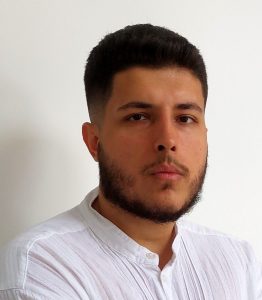
Vasko Kelić was born on October 18, 1996, in Belgrade, Serbia. He completed grammar school in the same city and in 2019 he finished his undergraduate studies in philosophy at the University of Belgrade, Faculty of Philosophy. He defended his BA thesis “”Artistic Intentions, Art Attempts and Artworks”” under the supervision of Monika Jovanović. In 2020, Kelić obtained his MA degree in philosophy at Central European University, Budapest. There he defended a thesis “Approaching the Problem of Numbers” supervised by Andres Moles. In his MA thesis, Kelić argued in favor of the idea that in standard cases there exists a moral duty to save the greater number of people. Insights from the thesis Kelić presented at online student conference “”Ethics and Its Applications”” organized at the University of Zagreb, Croatia. In the 2018 edition of Serbian philosophical journal “Filozofske studije” Kelić published a paper “Minimal State and Animal Rights” in which he argued that institutions of the minimal state are incapable of adequately protecting the rights of nonhuman animals. Areas of Kelić’s professional interest comprise political philosophy, ethics and philosophy of art.