



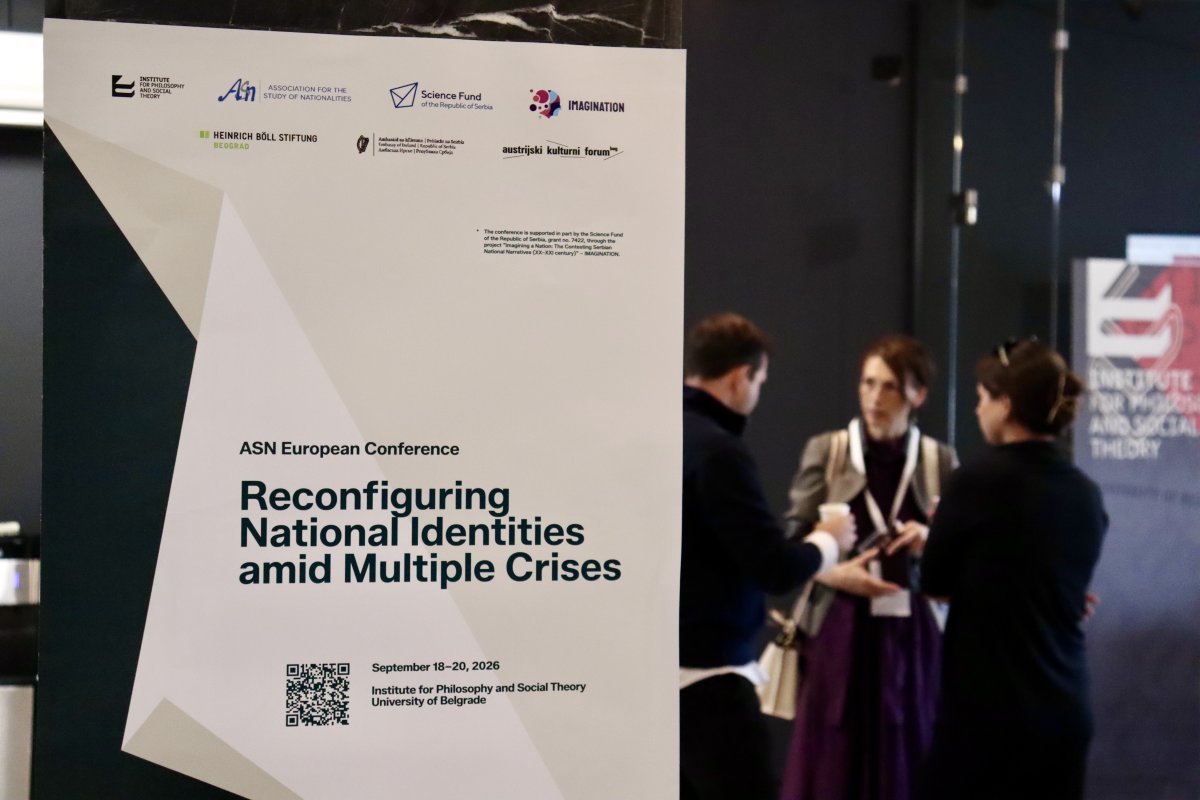
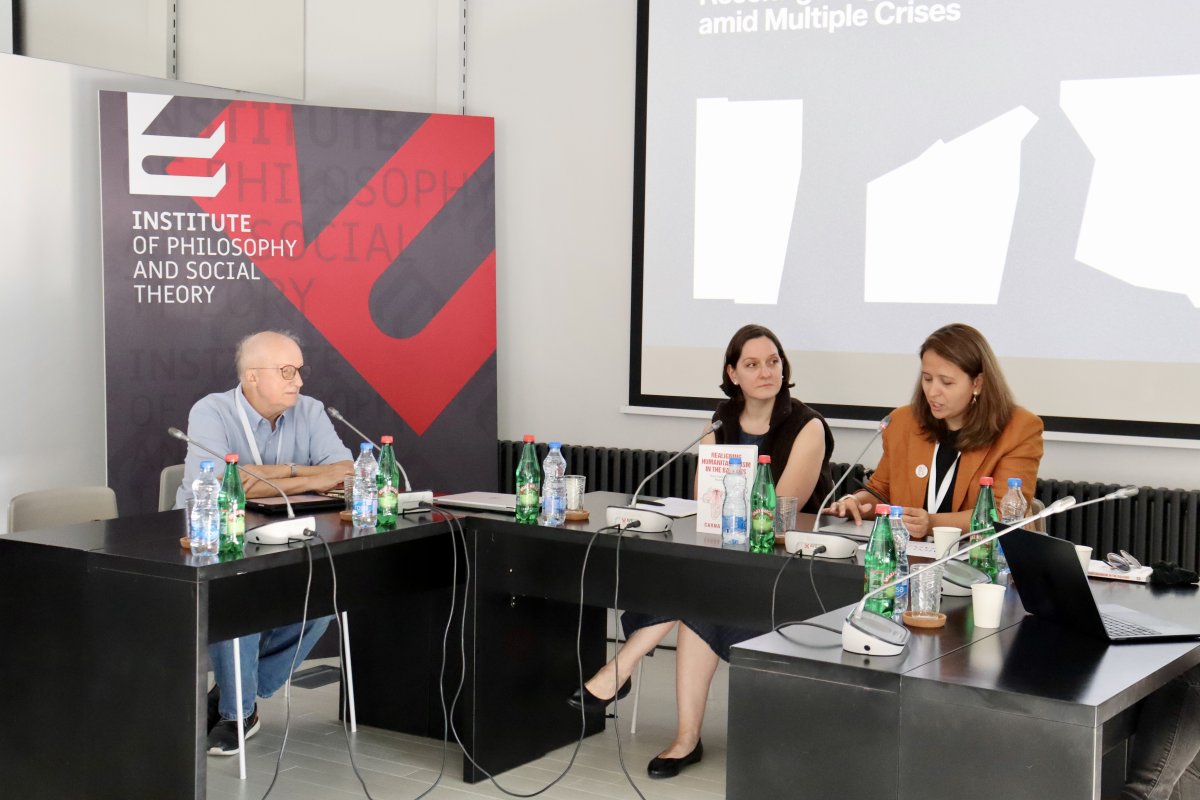
From 18 to 20 September 2026, the Institute for Philosophy and Social Theory, in cooperation with the Association for the Study of Nationalities (ASN), hosted the ASN European Conference Reconfiguring National Identities amid Multiple Crises.
The conference brought together 160 participants from 31 countries across 37 research panels, roundtables, and book discussions. Participants ranged from graduate and postgraduate students to some of the leading international scholars in nationalism studies.

The conference examined how national identities are transformed, contested, and reconfigured under the pressure of overlapping political, economic, ecological, and geopolitical crises. Wars, migration, democratic backsliding, economic insecurity, contested memories, and shifting geopolitical divisions provided the broader context for discussions of how communities define belonging, draw boundaries, interpret their pasts, and imagine their political futures.
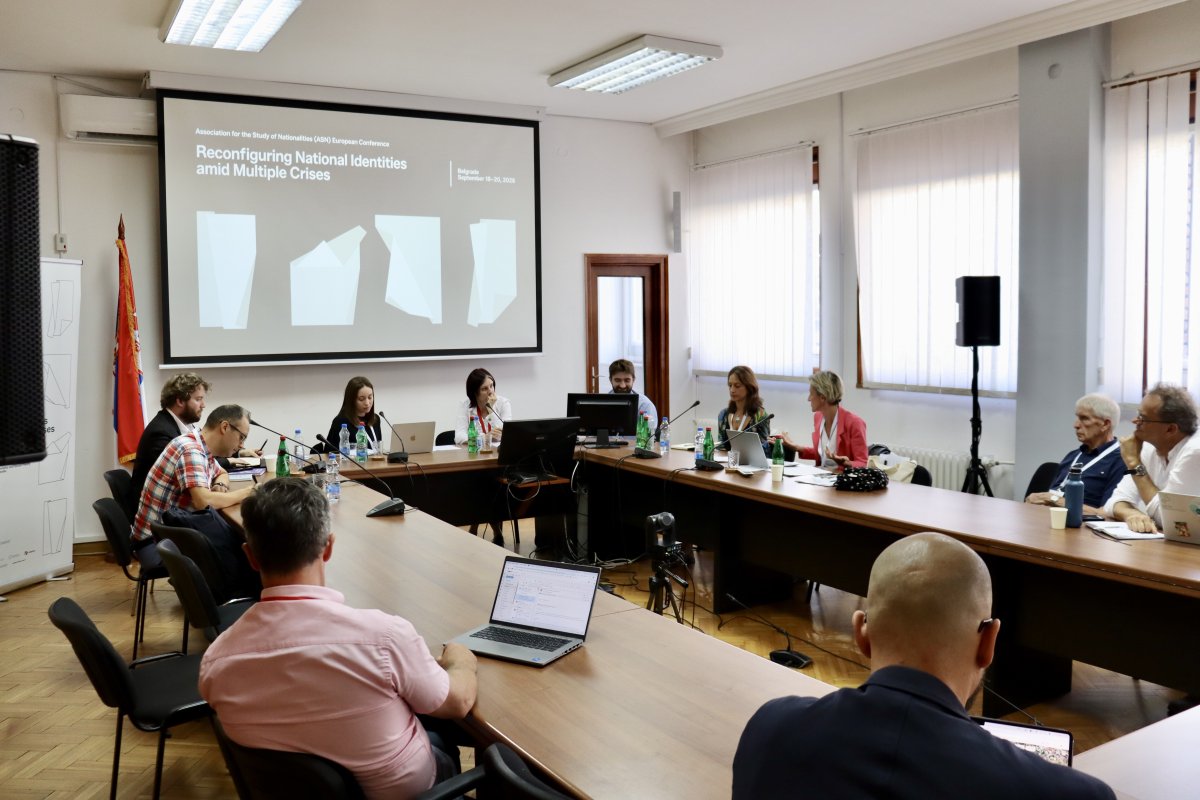
The breadth of the programme reflected the many ways in which nationalism and national identity intersect with broader social and political processes. Panels explored war and political violence, migration and exile, minority rights, language and education, memory politics and the legacies of war, protest and political mobilisation, populism and democratic backsliding, European integration, and geopolitical change. Other contributions examined how national belonging is shaped and negotiated beyond the immediate political sphere, through literature and film, culture and sport, as well as different practices of everyday life.
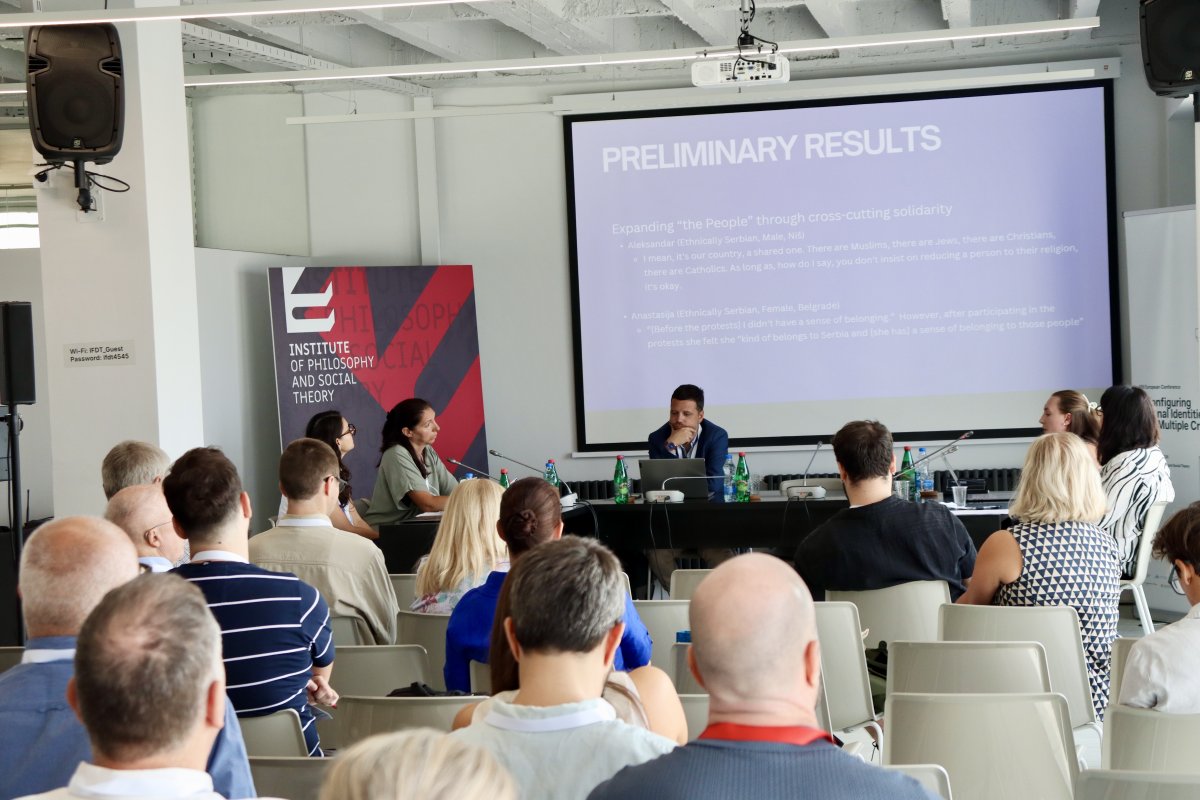
Scholars from history, sociology, political science, anthropology, cultural studies, law, geography, literature, and related fields contributed to these discussions. This disciplinary range reflected the complexity of nationalism itself: not simply an ideology or political movement, but a phenomenon operating through institutions and borders, public narratives, education, collective memory, cultural production, and everyday forms of belonging.
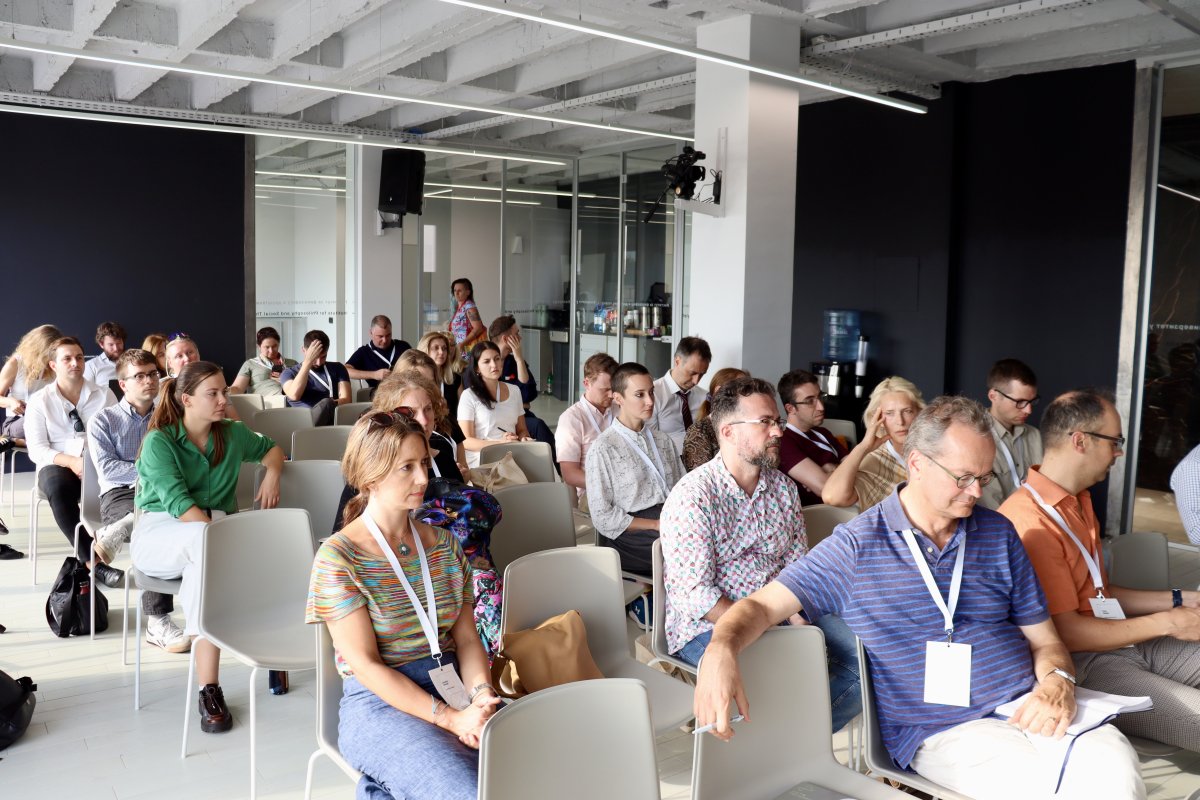
The conference also featured keynote lectures by Florian Bieber and Siniša Malešević. Florian Bieber, Professor at the University of Graz and President of ASN, delivered Nationalism, Everywhere, All at Once, while Siniša Malešević, Professor at University College Dublin, spoke on Nationalisms, Wars, and Micro-Solidarities. The two lectures raised broader questions about how nationalism should be understood and studied today: from its renewed prominence in politics and challenges to liberal democracy and international cooperation, to the social and organisational processes through which everyday bonds and solidarities become articulated and mobilised in national terms, particularly in contexts of war.

Bringing the ASN European Conference back to Belgrade twenty years after the city hosted ASN’s European Conference in 2006 gave this year’s gathering particular significance. Much has changed in the region, in Europe, and globally over those two decades, while questions surrounding nationalism, belonging, conflict, and political community have acquired new forms and renewed urgency. Returning to these questions in Belgrade, with scholars working across a wide range of contexts, made for three days of intensive academic exchange.
The conference also marked the final event of the project IMAGINATION – Imagining a Nation: The Contesting Serbian National Narratives (20th–21st Centuries), funded by the Science Fund of the Republic of Serbia (grant no. 7422). We thank the Science Fund of the Republic of Serbia, Heinrich Böll Stiftung – Belgrade Office, and the Embassy of Ireland in Serbia for their support in organising the conference.