



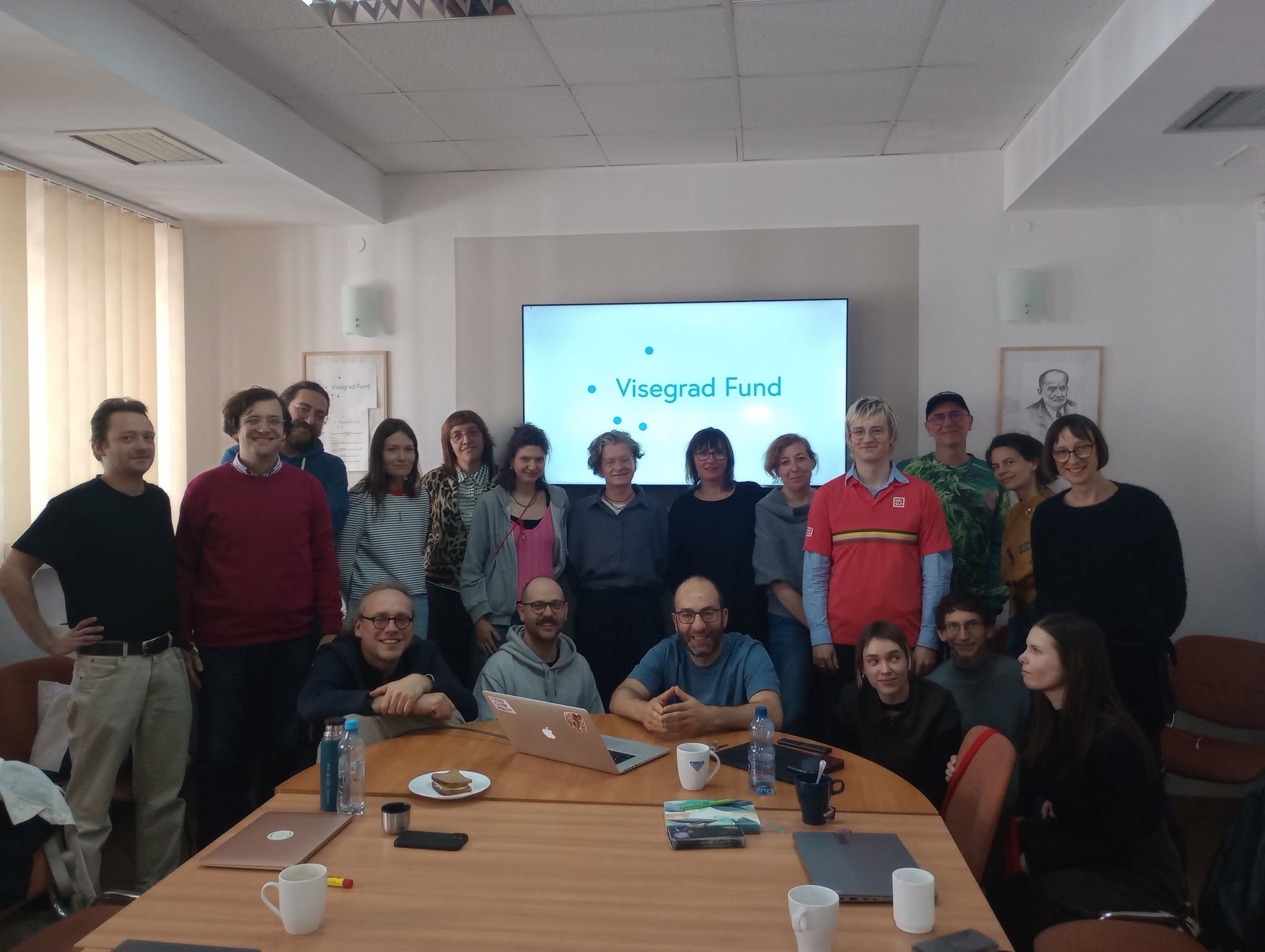
Researchers from the Institute for Philosophy and Social Theory (IFDT) participated in an international workshop held at the Polish Academy of Sciences’ Creative Work House in Jurata, on 28 and 29 April 2026. This event marks a key milestone in the realization of the international project “The Fight Continues: Emancipatory Past and Present-Day Struggles in Central Europe and the Balkans”, funded by the Visegrad Fund. IFDT is the lead partner on this project, which is being implemented in cooperation with the Institute of Philosophy and Sociology of the Polish Academy of Sciences, the Institute of Philosophy of the Czech Academy of Sciences, and the Faculty of Political Sciences at the University of Sarajevo. The event brought together 20 researchers and PhD students from Poland, Serbia, the Czech Republic, and Hungary.
Through intense discussions on the presented working papers, the participants – sociologists, philosophers, political scientists, historians, anthropologists, and literary theorists – developed an initial common vocabulary to interconnect their diverse approaches to the project’s main theme. The research focuses on the emancipatory legacy of the socialist past in Central Europe and the Balkans, as well as the role of this legacy in contemporary social struggles across these regions. Alongside the presenters, specialist discussants provided detailed commentaries, whilst brainstorming sessions at the end of both days helped identify the most important common threads.
The participants successfully bridged concrete empirical insights into political dynamics and contemporary movements with theoretical models that conceptualise how these phenomena emerge and how new forms of social agency develop through them. Understanding the ways in which the unfulfilled promises of the past are reactualised today in our region will enable the project team to analyse the specific potential for social change that exists in this space. By interconnecting individual research lines across time and space, the workshop laid a solid foundation for further collective scholarly work.