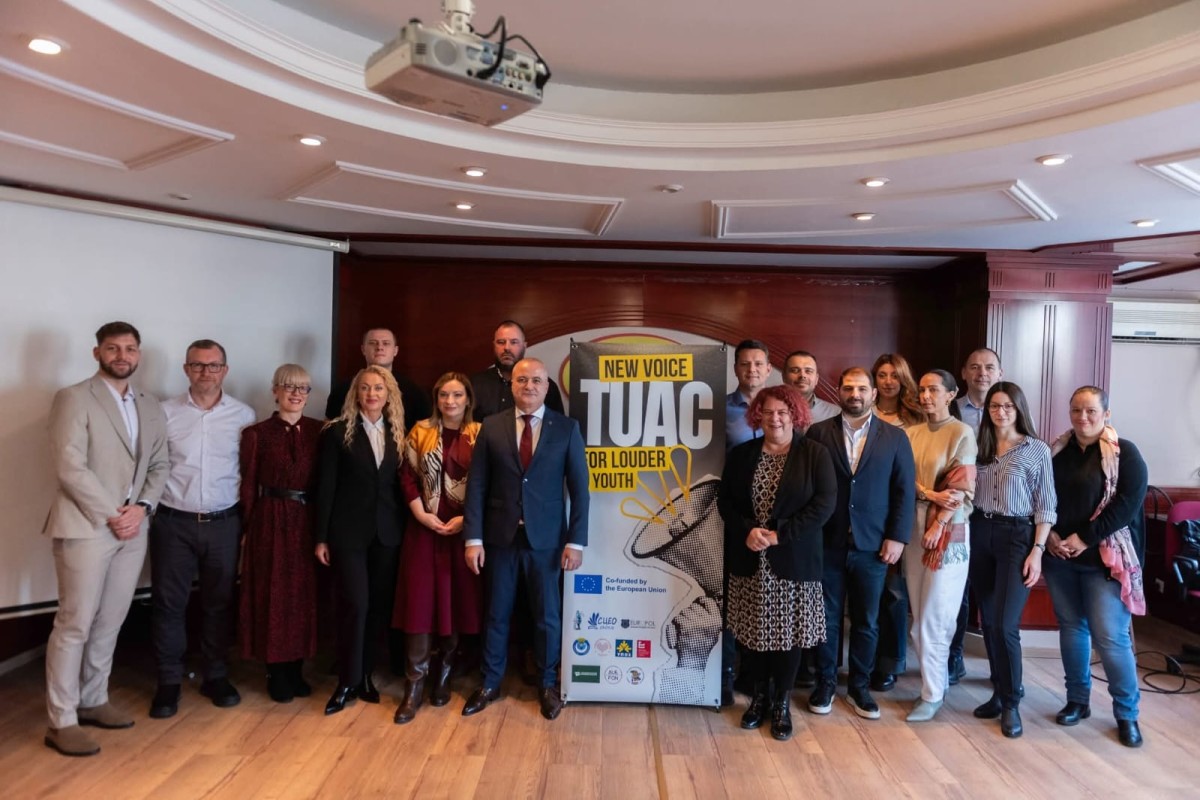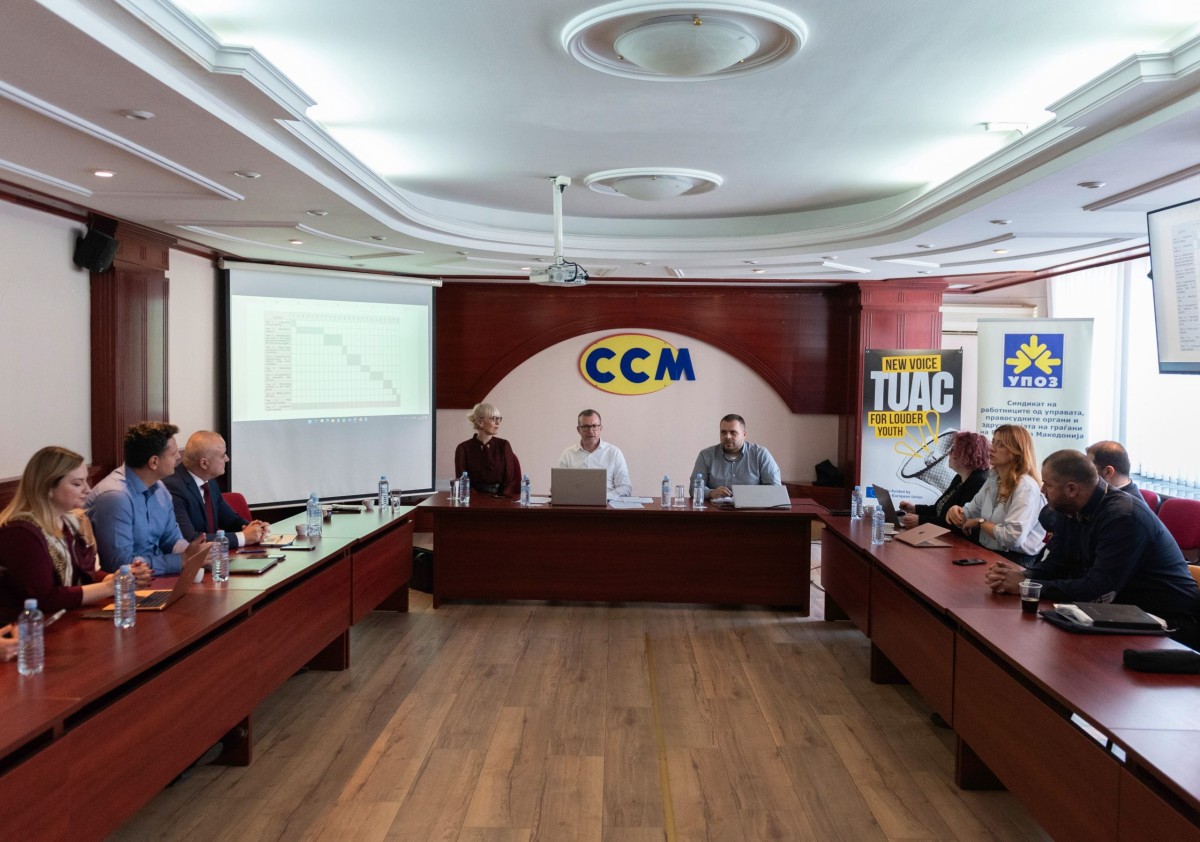

The kick-off meeting of the international two-year project “Trade Union – New Voice for Louder Youth” took place in Skopje from 10 to 12 December. The project is supported by the Erasmus+ Programme (Key Action 3 – European Youth Together) and brings together ten partner organisations from Serbia, North Macedonia, Croatia, Turkey, Romania, and Lithuania. The project is coordinated by the UPOZ trade union from North Macedonia.
The meeting marked the formal beginning of cooperation on an initiative that addresses the position of young people within contemporary trade union structures and their actual opportunities to participate in decision-making processes. The project starts from the assumption that young people’s interest in social and labour organising does exist, but that trade unions often lack mechanisms to translate this interest into sustained engagement and political relevance.
During the two-day discussions, representatives of partner organisations reviewed the project’s objectives and trajectory for the coming two years, with particular attention given to educational activities, forms of cross-border cooperation, and the ways in which trade unions communicate with younger generations. Discussions focused on the concrete challenges faced by young trade union activists, as well as on possibilities for developing programmes that respond to their lived experiences rather than abstract expectations.
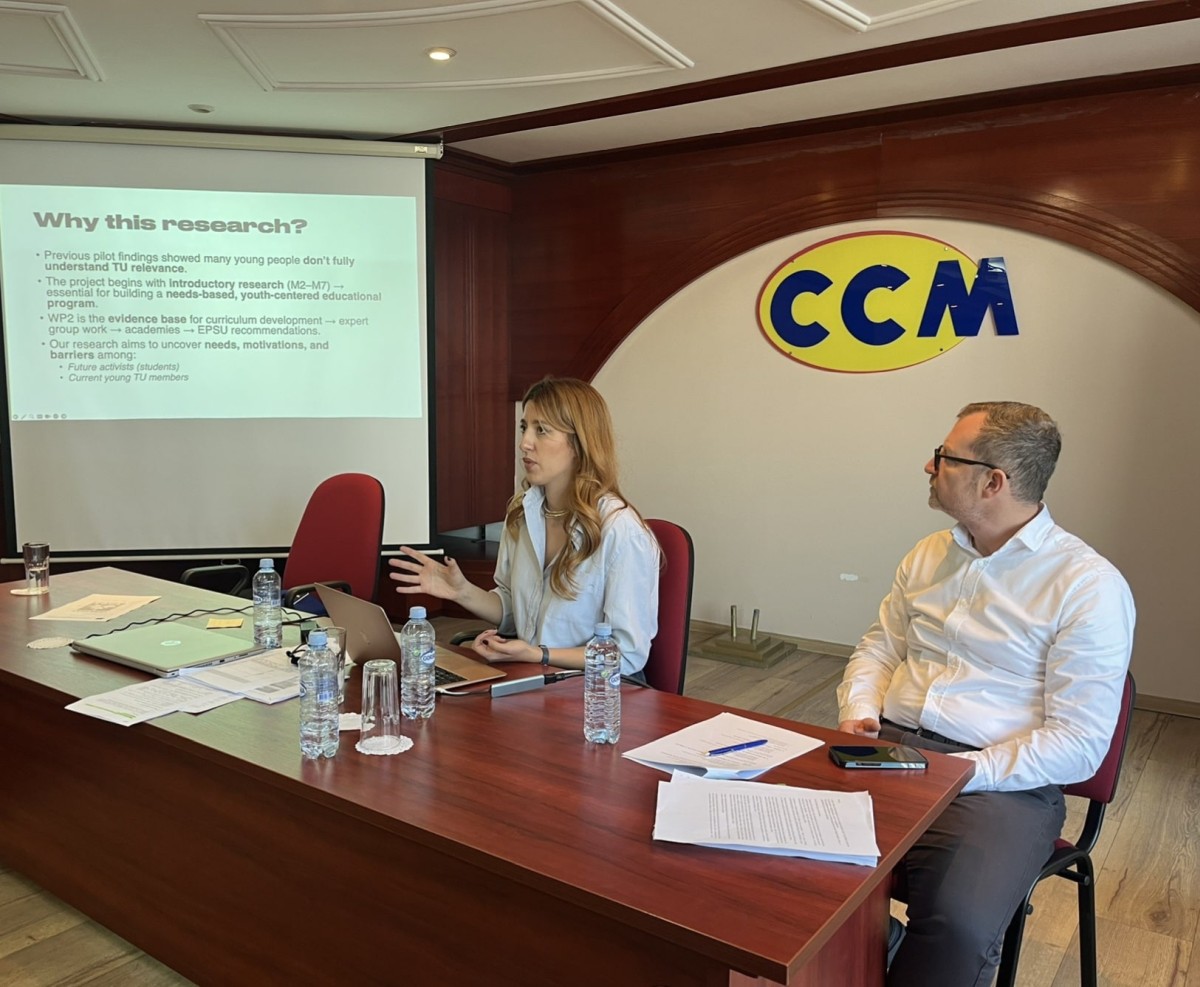
As part of the meeting, Dr Sara Nikolić, coordinator of the project’s research component, presented the research plan and highlighted the importance of qualitative approaches for understanding young people’s perspectives. She emphasised that listening closely to their experiences, motivations, and obstacles is a necessary step in rethinking models of trade union organising that are based on participation rather than on formal membership alone.
The opening meeting in Skopje created space for collective reflection on the role of trade unions in contemporary societies and on the place that young people can and should occupy within them. In this sense, the project does not merely aim to “include young people”, but to critically examine existing trade union practices and their relationship to generational, social, and political change.